Clinical Supervisor
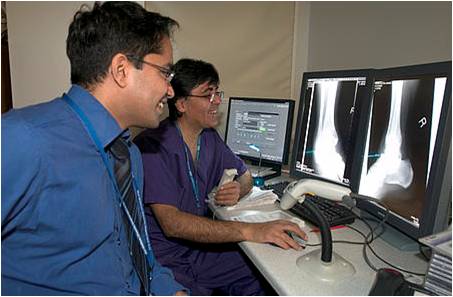 NHS England – North West has produced guidance on the roles, responsibilities, knowledge and skills required of a Clinical Supervisor (CS) working in postgraduate medical education in the North West.
This guidance will also support Trusts and other Local Education Providers (LEPs) in quality control as they educationally support, manage, audit and resource the educational role of a CS.
This guidance is based on the Gold Guide to Specialty Training [January 2018]; The GMC's Promoting Excellence [July 2015] and the Foundation Programme.
Definition
The GMC define a CS as:
A trainer who is selected and appropriately trained to be responsible for overseeing a specified trainee’s clinical work and providing constructive feedback during a training placement.
In many instances the same person may undertake both CS and ES roles for a given trainee. However, in specialty training (including GP trainees in secondary care attachments) some doctors act as CS only.
Roles and Responsibilities of a Clinical Supervisor
The standards for trainers as outlined in Promoting Excellence (p.21 and 42) are met in the outline of roles and responsibilities of a CS given below:
- Enables trainees to learn by taking responsibility for patient management within the context of clinical governance and patient safety
- Ensures that clinical care is valued for its learning opportunities; learning and teaching must be integrated into service provision.
- Undertakes clinical supervision of a trainee, giving regular, appropriate feedback according to the stage and level of training, experience and expected competence of the trainee.
- Undertakes assessment of trainees (or delegates as appropriate) using the dedicated workplace based assessment tools, has been trained in the use of these and understands the generic relationship between learning and assessment.
- Liaises with the appropriate Educational Supervisor over trainee progression.
- Must ensure that all doctors and non medical staff involved in training and assessment understand the requirements of the curriculum, including the workplace based assessment tools (Foundation, Specialty or GP) as it relates to a particular trainee.
Further information can also be found in the GMC's Outcome's for Graduates.
Knowledge and Skills Required of a Clinical Supervisor
A CS will need to demonstrate that they have knowledge and skills in the following:
- Equality, diversity and cultural awareness.
- Core CS Knowledge and Skills, which includes:
2.1 Workplace based (‘on the job’) teaching, including clinical skills teaching:
- To understand how adults learn best and the relevance of this to teaching.
- To understand how best to teach a clinical skill.
- To have some knowledge of a variety of teaching techniques/methods/tips and to practice them as appropriate.
- To understand the importance of evaluating teaching.
2.2 Workplace Based Assessments:
(including calibration for those involved in supervising secondary care placements for GP trainees)
- To understand the role, types and formative nature of workplace based assessments (WBAs) appropriate to the relevant specialty
- Have an understanding of what is acceptable progress
- To understand the importance of appropriate feedback as part of WBAs
- Have an understanding of the relationship between WBA’s and the educational supervisors ARCP report
- To identify the initial steps in managing trainees with problems
2.3 Giving feedback to trainees of all abilities:
- An understanding of some common frameworks for giving feedback
- Encourage reflection and self-assessment in learners
- Ability to identify and communicate what was done well and what could be done differently
- Importance of giving positive and specific criticism
- Importance of encouraging learners to agree a plan of action
2.4. Adult learning principles:
A brief overview of the following to help understand how trainees learn best:
- Understanding of the variety of learning styles and motivation
- Role modeling
- Importance and understanding of reflective practice
- Evaluation of teaching
- Educational environment
2.5. Relevant specialty portfolios/e-portfolios/Horus for Foundation:
- An understanding of the use of an educational portfolio to support effective learning and development
- A working knowledge of portfolio(s) as relevant to own specialty
2.6. Communication/team working:
- Understand the importance of timely and regular communication with trainees.
- Have a working knowledge of reporting structures within own specialty department and local Trusts as appropriate.
- Is aware of the importance of role modeling and is a positive role model.
2.7. Ethics:
- Respect for the learner and the process of learning
- Understanding of the principles of confidentiality in the educational environment
- Foster a safe environment in which learners can challenge and discuss issues
2.8. Understanding GMC requirements of CS:
- Have read the GMC Standards for Trainers
- Have read the definitions of CS and ES
- Understand their own educational role in relation to the standards
- Understand their own role in relation to local education structures and processes
- Recruitment and selection. All those taking part in recruitment will need to have completed the requisite training.
- All CS will be expected to undergo annual appraisal which must include an element of educational appraisal. Please see the NHS England – North West Guidelines on Appraisal.
Achieving the Knowledge and Skills of a Clinical Supervisor
Trusts are responsible for providing training to ensure these requirements are met.
Royal Colleges, Universities, and other education providers provide training which individuals may be able to use to demonstrate that they have met the required standards.
To be formally recognised as a trainer Clinical Supervisors need to provide a portfolio of evidence to show that they meet the GMC trainer standards. For more information on the evidence required please visit the Education Standards and Guidance page.
All CS will be expected to demonstrate that they continue to meet the standards outlined through annual appraisal. Please see further guidance about appraisal on the Appraisal page.
Under the GMC arrangements for recognising and approving trainers it is the LEPs responsibility to ensure that all Clinical Supervisors meet the necessary requirements for the role and to report to NHS England – North West on their trainers for live reporting to the GMC.